Knitting from a pattern that expects a different body
Forty years of knitting taught me every workaround for a pattern that does not fit, pencil marks, graph paper, arithmetic at midnight. The machine has taken over the arithmetic, and taken it over completely. The situation every knitter knows. The sweater pattern is written for a 34 inch bust, or the yarn specified is discontinued, or the gauge swatch, that honest little tyrant, says 22 stitches where the pattern wants 20. Every one of these used to be an evening of percentages and swearing. Now I tell the program the whole situation, pattern details, my gauge, the target measurements, the yarn I actually have with its yardage, and ask for the adjusted numbers, stitch counts by size, cast on counts, where the shaping changes land, and the key instruction, show your arithmetic so I can check it. It shows the arithmetic. I check it with my calculator, twice, the first three times, and after that you learn its reliability, which is high on arithmetic and, I will warn you, lower on pattern logic, so the shaping decisions stay mine. Same with substitution math, whether two strands of what I have approximates the worsted I cannot get, and the same for crochet, the quilters in the Tuesday group use it for fabric yardage the same way. The generations pass this down differently now. My grandmother's corrections lived in her head. Mine live in a conversation with a machine that never tires of the seventh recalculation. The sweaters fit better than they did, is the honest result, and the gauge swatch remains the tyrant it always was.
Want the hands-on version? Come try it at a free class →
AI, in plain English three small answers, no jargon
How AI learns
Picture a cook who has read millions of recipes but never tasted food. AI learns patterns from examples at enormous scale, which is both its strength and the reason it can be confidently odd.
AI and jobs
Predictions vary wildly, and honest ones admit the uncertainty. The pattern so far: AI absorbs tasks before whole jobs, and the people who learn the tools tend to do the absorbing.
AI and bias
AI learns from human-made data, so human biases can ride along. Responsible teams test and correct for this, and you help by reporting answers that feel slanted.
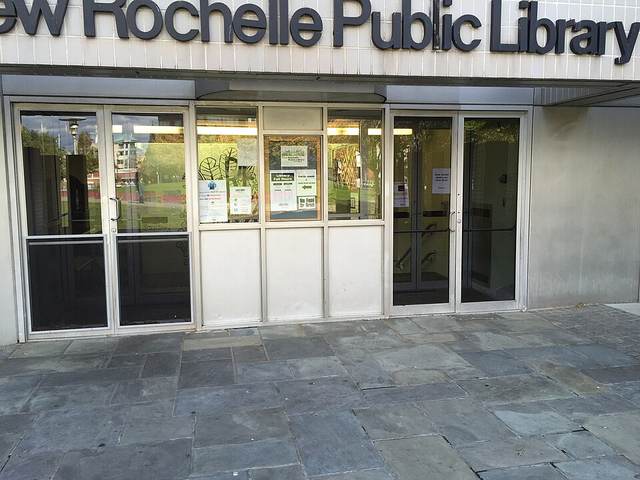
The Huguenot Children's Library is housed in an 1869 Second Empire brick residence built for the Mahlstedt family, who harvested ice from the adjacent lakes. The city acquired the property in 1922, and the house served as a branch before volunteers spent 1996-1997 renovating it into Westchester's only freestanding children's library, which reopened November 22, 1997. It serves children from kindergarten through sixth grade.
From the library's own site, source.
Visit or contact
- Address: 794 North Avenue New Rochelle, NY 10804
- Phone: 914-632-8954
- Website and hours: nrpl.org
- System: Westchester Library System
Hours change with the season, so we link the library's own site instead of copying a schedule that could go stale.
Get an AI class here
Path one: ask the library directly. Patron requests carry real weight with program coordinators, and their website and phone number are linked above.
Path two: tell us you want a class at Huguenot Children’s Library and we will count you in when we schedule one there.
What you’ll find there
- Museum passes
- Meeting and study rooms
- Public computers
- Printing, copying, scanning
- Local history and genealogy
- Book clubs
- ESL and English learning
- Job and career help
- Tax help
- Homebound delivery
Collected from the library’s own website. Availability changes — confirm details on their site.
Two free AI classes for Huguenot Children’s Library
Live, beginner-friendly, 90 minutes each. Your first two classes cost $0, including the presenter fee — bring us in, see how your community responds, then decide.
For library staff
Reply “send dates” to our email and we’ll send available times within a day. Or start here:
Email us for available dates →
No presenter fee. No contract. You provide the room, chairs and wifi — we bring everything else.
How booking works · browse all six class topics (no email needed)
I’m a patron of this library
Want a class here? Leave your email and we’ll tell you if one gets scheduled at Huguenot Children’s Library — and pass the count to their program coordinator.
One email only when scheduling news exists. Or call the library and say you’d attend — patron requests carry real weight.
Heard about us from a neighbor? Forward this page to whoever books programs at your library.
Is this a sales pitch to our patrons?
No. Nothing is sold or pitched in the room, and patrons never pay to attend. Take-home materials are free.
What’s the catch on “two free classes”?
None, and here is the model: your first two classes cost you nothing, we collect attendance and feedback, and the next library books us because yours proved it works. Repeat classes after that are a modest honorarium sized to your budget.
What do we need to provide?
A room, chairs, and wifi. We bring the projector, adapters, a backup hotspot, printed handouts — every attendee leaves with a printed AI cheat sheet.
Library AI Courses teaches free, live, 90 minute AI classes at public libraries across the region. A listing here is a directory entry, not an endorsement by the library. Classes get scheduled when a library books one or enough patrons ask. Library staff: how booking works →