Reading AI news without the heartburn
The news about AI arrives in two flavors, revolution and ruin, and both sell newspapers and neither helps you decide what to have for dinner. A calmer approach, after a year of deliberately reading this coverage like a skeptic, works like this. First, separate the capability stories from the product stories. A laboratory demonstrating something is a capability story. Something you can actually use this month, for free or twenty dollars, is a product story. The gap between the two is years wide and always has been, and most headlines blur it on purpose. Second, when a story says AI will eliminate or save some enormous thing, look for who is quoted. A company announcing its own breakthrough is a press release wearing a trench coat. Third, remember that you live on the product side of the gap, where the changes arrive slowly and mostly as small conveniences. Your bank drafts letters with it. Your pharmacy checks interactions with it. Your phone suggests replies. None of that arrived with trumpets, and the next product side changes will arrive the same way, quietly, in an update you barely notice. The middle of the newspaper will keep shouting, because shouting is the business model. Your job, your actual job, is to try the free thing once a month, notice what helps, and refuse the heartburn. Fear is a terrible study habit. Curiosity, applied in small doses at the library, works far better.
Want the hands-on version? Come try it at a free class →
AI, in plain English three small answers, no jargon
Rules for AI are coming
Governments are writing AI law now, with Europe's AI Act furthest along. Expect nutrition-label-style disclosure: what is AI, what data it touched, and what it may not do.
AI that sees, hears, and reads
Multimodal AI works across photos, charts, audio, and text in one conversation. Show it your open fridge and ask what to cook; that is roughly today's level.
Generative vs. everyday AI
Most AI quietly sorts and predicts: spam filters, map routes, photo sorting. Generative AI is the newer kind that creates text, images, music, and code. ChatGPT is generative; your spam folder is not.
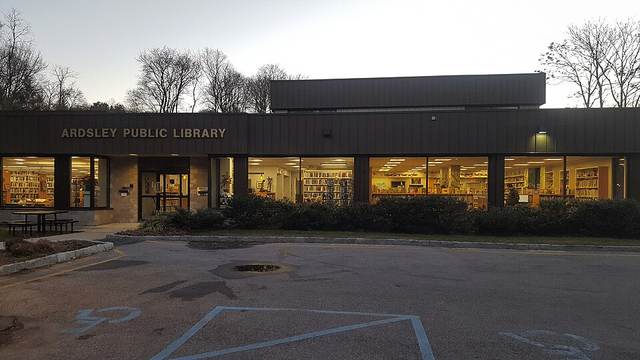
You can see your checked out items and when they are due as well as create a wish list Library Hours: Monday: 10:00 a.m. - 5:30 p.m. Saturday: 10:00 a.m. - 5:30 p.m.* Sunday: CLOSED *Saturday hours in July & August : 10:00 am to 1:00 pm To contact us here at the library: Phone: 914 693 6636 Email: [email protected]
From the library's own site, source.
Visit or contact
- Address: 9 American Legion Drive Ardsley, NY 10502
- Phone: 914-693-6636
- Website and hours: ardsleypubliclibrary.org
- System: Westchester Library System
Hours change with the season, so we link the library's own site instead of copying a schedule that could go stale.
Get an AI class here
Path one: ask the library directly. Patron requests carry real weight with program coordinators, and their website and phone number are linked above.
Path two: tell us you want a class at Ardsley Public Library and we will count you in when we schedule one there.
What you’ll find there
- Meeting and study rooms
- Seed library
- Printing, copying, scanning
- Book clubs
Collected from the library’s own website. Availability changes — confirm details on their site.
Two free AI classes for Ardsley Public Library
Live, beginner-friendly, 90 minutes each. Your first two classes cost $0, including the presenter fee — bring us in, see how your community responds, then decide.
For library staff
Reply “send dates” to our email and we’ll send available times within a day. Or start here:
Email us for available dates →
No presenter fee. No contract. You provide the room, chairs and wifi — we bring everything else.
How booking works · browse all six class topics (no email needed)
I’m a patron of this library
Want a class here? Leave your email and we’ll tell you if one gets scheduled at Ardsley Public Library — and pass the count to their program coordinator.
One email only when scheduling news exists. Or call the library and say you’d attend — patron requests carry real weight.
Heard about us from a neighbor? Forward this page to whoever books programs at your library.
Is this a sales pitch to our patrons?
No. Nothing is sold or pitched in the room, and patrons never pay to attend. Take-home materials are free.
What’s the catch on “two free classes”?
None, and here is the model: your first two classes cost you nothing, we collect attendance and feedback, and the next library books us because yours proved it works. Repeat classes after that are a modest honorarium sized to your budget.
What do we need to provide?
A room, chairs, and wifi. We bring the projector, adapters, a backup hotspot, printed handouts — every attendee leaves with a printed AI cheat sheet.
Library AI Courses teaches free, live, 90 minute AI classes at public libraries across the region. A listing here is a directory entry, not an endorsement by the library. Classes get scheduled when a library books one or enough patrons ask. Library staff: how booking works →